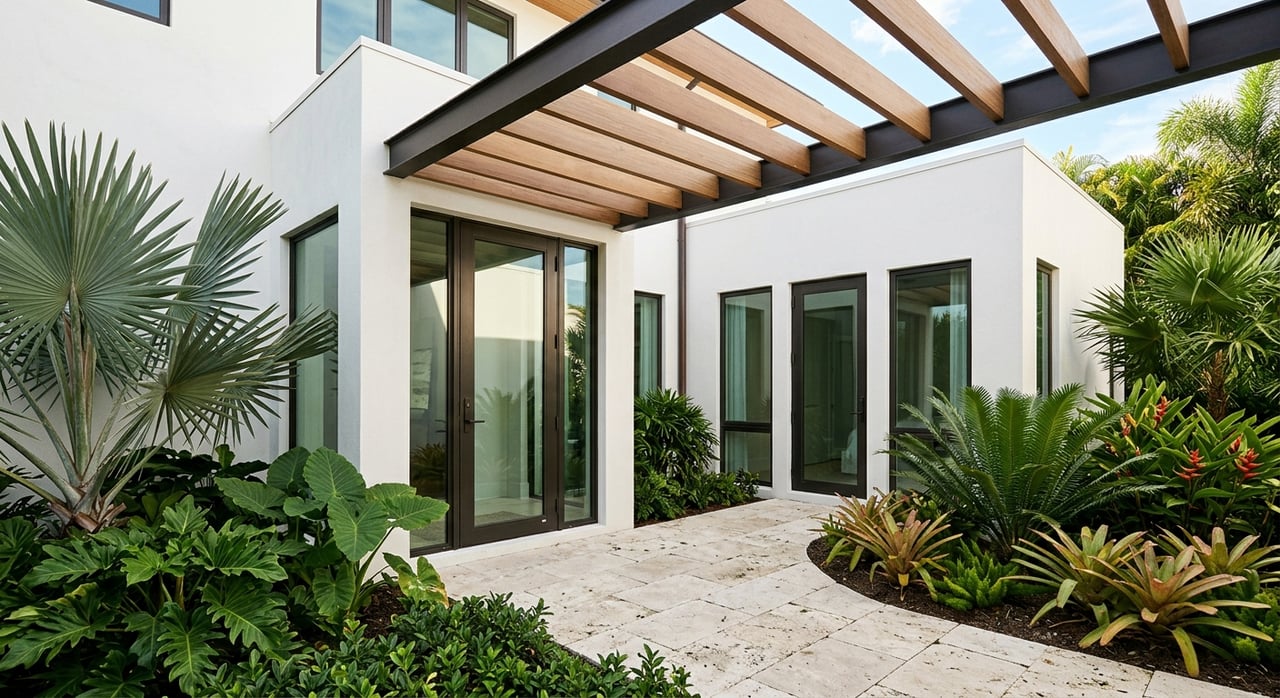
Glenvar Heights Multi Generational Homes for Flexible Living
May 28, 2026
May 28, 2026
If you need more room for family, privacy, or a work-from-home setup, Glenvar Heights may deserve a closer look. In this part of Miami-Dade, many buyers are not just searching for extra square footage. They are looking for flexible space that can adapt to aging parents, adult children, long-term guests, or a private office. The good news is that with the right home and the right planning, multigenerational living can be both practical and future-focused. Let’s dive in.
Glenvar Heights is a census-designated place in Miami-Dade County with 20,786 residents and 9,241 households, based on 2020-2024 Census data. The area also shows strong household connectivity, with 99.1% of households reporting a computer and 96.2% reporting broadband internet. That does not prove a home is office-ready, but it does support the idea that remote work is part of everyday life for many households here.
The neighborhood’s housing story also matters. Miami-Dade County notes that many older southwest Miami-Dade communities were developed with expansive lots and postwar single-family homes that often used practical, climate-responsive designs. While that is county-level context rather than a parcel-by-parcel rule for Glenvar Heights, it helps explain why some homes in the area may offer useful flexibility for reconfiguration.
From a market standpoint, Glenvar Heights can appeal to buyers thinking long term. Miami Realtors reported 18 closed single-family sales in Q2 2025, with a median sale price of $1.59 million, a median time to contract of 57 days, and 47 active listings, or 9.2 months of supply. Because the number of sales is small, these figures can shift quickly, so it is smarter to view the area through the lens of adaptability and lifestyle fit rather than short-term certainty.
Not every extra room works for multigenerational living. The most useful homes are the ones that allow togetherness and privacy at the same time. In Glenvar Heights, that usually means looking beyond bedroom count and paying closer attention to layout, access, and future permitting potential.
A strong setup often includes:
These details matter because an ideal multigenerational home is not just bigger. It is easier to use in a way that feels comfortable, organized, and sustainable over time.
If you are thinking about a more independent living arrangement, Miami-Dade County’s accessory dwelling unit rules are essential. The county defines an ADU as an attached or detached ancillary residential unit on the same lot as the main single-family home, with a separate kitchen, bathroom, and sleeping area. The county also allows part of an existing single-family house to be converted into an ADU.
That definition matters because it gives buyers a clear framework. If your goal is a private space for family, a live-work setup, or a more flexible long-term property design, the best homes are often the ones that can create independence without requiring a full teardown or total rebuild.
Freddie Mac also identifies multigenerational living and remote-work office space as common ADU uses. For you as a buyer, that makes the conversation more practical. You are not only shopping for today’s floor plan. You are evaluating whether a home could support how your household may change in the years ahead.
This distinction is easy to miss, but it is important. Miami-Dade says a guesthouse is intended for occupants of the main home and their family, and it may not be rented for a fee unless it is converted to an ADU. If you do not need rental income and only want private space for family or guests, a guesthouse setup may still be useful.
If flexibility is the goal, you will want to understand which category a property falls into today and what would be required to change that later. A space that looks perfect in photos may not function legally the way you expect. That is why early due diligence matters so much in this part of the search.
In Miami-Dade County, one practical threshold can shape what is possible. The county’s current ADU guidance says the lot must be at least 7,500 square feet for an ADU or guesthouse under the applicable rules. In Glenvar Heights, that makes lot size one of the first items to confirm when a buyer is considering multigenerational living.
This does not mean every lot above that size will qualify, or that every lot below it is unusable for flexible living. It simply means the county rule creates a starting line. If a property does not meet that threshold, your options may be more limited from the start.
Even when a lot appears promising, the county’s design and use standards still shape feasibility. Detached units may not sit in front of the principal structure, and the accessory unit should match the main home’s exterior finish and roof style. Parking rules also matter, because the accessory unit is limited to one additional parking space and no more than two vehicles, with parking on-site or in the adjacent swale.
These details can affect whether a property is truly a fit for your plans. A home with rear-yard space, a workable driveway, and a layout that supports privacy may be far more valuable than one with more square footage but fewer practical options.
Before you buy with renovation in mind, make sure you understand the permit path. Miami-Dade requires permits for new structures, additions, plumbing, electrical, HVAC, exterior repairs like windows, doors, siding, and roofs, plus interior renovations that alter walls or systems. ADU applications may also involve zoning review, floor-area limits, lot location, appearance standards, parking, impact fees, and an owner disclosure statement.
If a space was built without permits and now needs to be legalized, the county says the process is handled like a new project. That means scaled plans showing the site, floor plan, elevation, and relevant structural, electrical, mechanical, plumbing, and roofing details may be required. In other words, unpermitted bonus space is not automatically a shortcut.
Financing can be one of the biggest advantages when you buy with a clear plan. Fannie Mae treats a one-unit property with an ADU as a one-unit property. Its guidance says income from an existing ADU on a one-unit primary residence may be used for qualifying in purchase or limited cash-out refinance transactions, but only one ADU’s income may be counted and it is generally capped at 30% of total qualifying income.
Freddie Mac also says ADUs can be financed through its mortgage offerings and notes that rental income may count if requirements are met. It further states that ADUs may have the potential to increase long-term property and resale value. For buyers in Glenvar Heights, that means a legal, well-documented accessory space may support both lifestyle goals and future marketability.
Fannie Mae also notes that when a property will generate rental income, lenders need income documentation and comparable rent support. A simple description of the space is not enough. That is one reason financing guidance early in the search can save time and reduce surprises later.
If your goal is multigenerational living, the smartest search is usually not the broadest one. It is the most targeted. You want to identify homes that already offer the right layout or have a realistic path to legal conversion, private use, and future resale appeal.
As you evaluate homes, focus on:
This approach helps you avoid falling in love with a floor plan that does not work on paper. It also keeps your search grounded in what the county will actually allow.
For buyers, Glenvar Heights can be appealing because flexibility often matters as much as style. A home that supports family privacy, work-from-home needs, or future accessory space may offer more lasting value than one with a flashier finish but less functional potential.
For sellers, these same features can help your property stand out, especially when they are presented clearly and accurately. Layout, access, parking, and permitted improvements can all influence how buyers see a home’s usefulness over time. In a market where inventory and pricing can shift quickly, that kind of practical value often deserves careful positioning.
Whether you are buying for a changing household or preparing to sell a home with adaptable space, the key is to pair vision with facts. In Glenvar Heights, the best opportunities are usually the ones where lifestyle goals, county rules, and financing options all line up.
If you are weighing a move in Glenvar Heights and want clear guidance on property fit, layout potential, and financing considerations, connect with Melva Garcia for a concierge-level consultation.
September 17, 2026

September 10, 2026

September 3, 2026
August 27, 2026
August 20, 2026
August 13, 2026
August 6, 2026
August 6, 2026
July 23, 2026
With years of combined knowledge in every aspect of the real estate industry – from negotiation and financing to selling and purchasing – Melva Garcia works to make the sale or purchase transaction a seamless and smooth experience.
MELVA GARCIA
[email protected]
(305) 491-4437
2550 S Bayshore Drive #106 Coconut Grove FL 33133 1515 Sunset Drive Suite 40 Miami FL 33143