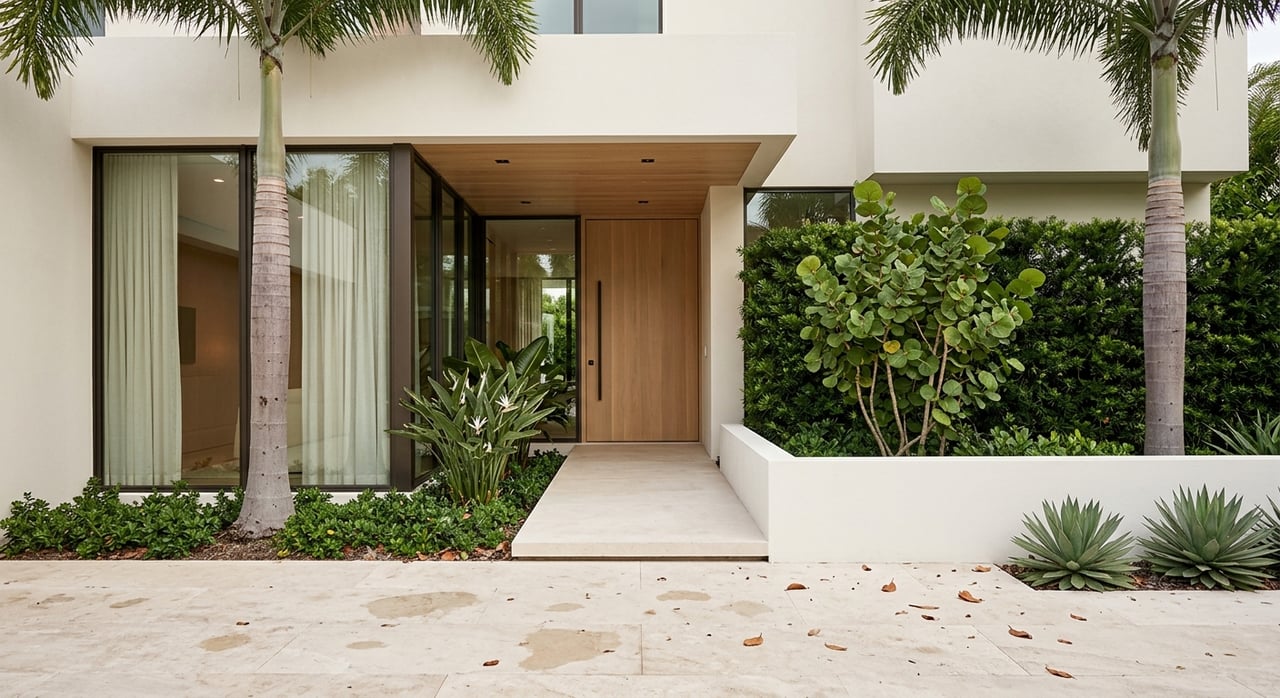
Coconut Grove Neighborhoods Guide for Discerning Buyers
April 2, 2026
April 2, 2026
If you only look at Coconut Grove as one neighborhood, you can miss what actually matters most as a buyer. The Grove works more like a collection of small, distinct pockets, each with its own rhythm, housing mix, and day-to-day feel. If you want to buy with confidence, it helps to understand how these micro-neighborhoods differ before you start touring. Let’s dive in.
Coconut Grove is not a one-size-fits-all market. The City of Miami’s neighborhood conservation overlays, known as NCD-2 and NCD-3, exist in part because the area includes several distinct, unofficial neighborhoods with different physical character and development patterns.
That matters when you are buying. Two homes with similar square footage can offer very different lifestyles depending on whether you want walkability, larger lots, waterfront access, or a more tucked-away residential setting.
Coconut Grove also sits in a premium price tier within Miami-Dade. As of March 2026, Realtor.com’s Coconut Grove market overview shows a median listing price of $2.5 million, compared with $635,000 for Miami overall and $599,000 for Miami-Dade County.
A practical way to compare Coconut Grove is by lifestyle category. Most buyers are really choosing among four broad options:
Once you know which lifestyle fits you best, your search usually becomes much more focused.
If your top priority is being close to the action, Village Center and Center Grove are usually the first places to study. The city defines this area within NCD-3 around the Grove’s central corridor, where the neighborhood’s retail, dining, and waterfront destinations come together.
This is the part of Coconut Grove many buyers picture first. The waterfront framework ties together places like Peacock Park, Dinner Key, Myers Park, the sailing club, and Kennedy Park, while the Coconut Grove business district identifies CocoWalk as the center of the neighborhood.
Housing here tends to be more urban in form than in other parts of the Grove. You are more likely to see condos, townhomes, and mixed-use buildings than large estate lots.
From a pricing standpoint, this section of the market is still firmly upscale. Realtor.com’s Grove Center submarket showed a median home price of $1.9485 million and $1,489 per square foot as of February 2026.
Village Center or Center Grove may be the right match if you want:
As you walk this area, pay attention to street activity, parking setup, and building style. The city’s design guidance for nearby urbanized sections emphasizes pedestrian entrances, screened parking, and stronger street-wall continuity, which helps explain why this part of the Grove feels more urban than the surrounding residential streets.
West Grove is one of the most historically specific parts of Coconut Grove. NCD-2 covers the Village West Island and Charles Avenue area around Douglas Road and Grand Avenue, and the city describes its character through Caribbean and Bahamian heritage and the legacy of Coconut Grove’s African-American community.
That heritage shows up in the design language. The city’s guidelines call for features such as Bahamian shutters, smooth stucco, clapboard or board-and-batten walls, screened porches, and gable or hip roofs that reflect traditional local building patterns.
For buyers, West Grove is best understood as a more mixed and condition-sensitive market than the Grove’s waterfront luxury pockets. The housing stock and block-to-block feel can vary more here, so touring carefully and comparing properties with context is especially important.
West Grove often stands out for buyers who value:
City workshop materials note that duplex, triplex, and multifamily uses are more concentrated in portions of this area, especially between SW 27th Avenue and Charles Avenue. That does not make West Grove one thing or another, but it does mean your exact block can shape your experience more than broad neighborhood labels suggest.
North Grove is often where buyers focus when they want a leafy setting with strong access to bay-adjacent amenities. The city defines North Grove as the area north of the village core, bounded by U.S. 1, Rickenbacker Causeway, Biscayne Bay, and SW 27th Avenue.
The planning language here highlights tree canopy, public open space, recreational opportunities, and bay views. In practical terms, buyers often see North Grove as close-in, lush, and more water-adjacent than South Grove.
For a pricing reference, a Zillow proxy for North-East Coconut Grove showed a typical home value of $1.372 million as of January 2026. That figure is best used as a broad comparison point, not as an exact map of official boundaries.
North Grove may be a strong fit if you want:
South Grove is often the pocket buyers compare when they want a more residential cadence. The city defines this section of NCD-3 south of the central corridor, with boundaries tied to streets such as Loquat, Kumquat, Franklin, Main Highway, Munroe Drive, Prospect Drive, Battersea Road, and Le Jeune Road.
In buyer terms, South Grove is generally known for a quieter feel and larger-lot pattern than the village core. It tends to appeal to people who want more separation from the busiest parts of the neighborhood while still being in Coconut Grove.
For a pricing proxy, Zillow’s South-West Coconut Grove submarket showed a typical home value of $1.724 million as of November 2025. Again, that is a useful comparison tool rather than a perfect match to official planning boundaries.
South Grove is often the cleaner match if you are looking for:
If bay access is your top priority, you will want to compare Coconut Grove’s waterfront and community-association enclaves separately from the inland single-family streets. The City of Miami identifies places such as The Cloisters on the Bay, Grove Isle, The Moorings, Yacht Harbour, Grove Towers, and Bay Heights-related pockets as part of the Grove’s association landscape.
These areas tend to attract buyers who want marina proximity, water views, or a more enclosed residential setting. They are not one uniform product type, though. Some are condo-oriented, some are more private enclave environments, and the pricing range can vary widely.
That range is important. Realtor.com shows Sailboat Bay with a median home price of $649,500, while recent waterfront examples in places like Yacht Harbour and Grove Isle have been roughly in the $1.3 million to $2.4 million range.
These pockets are often the right comparison set if you want:
Part of Coconut Grove’s appeal is that it does not feel generic. The city’s conservation intent in NCD-3 is to protect lush landscaping, unusual lot sizes and shapes, bay views, and historic structures, while NCD-2 guidance reinforces compatibility with early local building traditions and Caribbean vernacular forms.
In plain English, the Grove often reads as low-rise, green, and porch-oriented even when home prices are high. City workshop materials describe tree-canopied bungalows, tin roofs, gabled roofs, screened-in porches, curving streets in places like Bay Heights, and Bahamian influence in West Grove.
That is why the same budget can buy very different forms of living here. One buyer may prefer a village condo near CocoWalk, while another wants a tucked-away home on a leafy street with a different architectural feel.
Lifestyle in Coconut Grove is not just about the house itself. It is also about how you use the neighborhood day to day.
A few landmarks shape the buyer experience more than almost anything else. Peacock Park anchors the waterfront at 2820 McFarlane Road, Kennedy Park offers waterfront space, a dog park, and an outdoor gym at 2400 South Bayshore Drive, and Dinner Key Marina adds another strong lifestyle draw near the village heart.
For many buyers, these places explain the Grove better than a map does. They are part of why Coconut Grove is often experienced as a walkable, waterfront neighborhood instead of simply a collection of addresses.
For buyers thinking about school convenience, Coconut Grove becomes even more location-specific. The city’s workshop materials note that the Coconut Grove NCD area includes three public schools, and Coconut Grove Elementary is a key public elementary option at 3351 Matilda Street.
The Grove also has a notable private-school cluster along the village core and Main Highway corridor, including Ransom Everglades, St. Stephen’s Episcopal Day School, and Carrollton School of the Sacred Heart. Because several campuses are concentrated in central and north-side pockets, commute patterns can vary depending on where you buy.
The key takeaway is simple: if school proximity matters to you, map your likely routes early in the process. In Coconut Grove, a small shift in location can change your day-to-day convenience.
If you are trying to decide where to start, this quick framework can help:
| Priority | Best area to study first |
|---|---|
| Walkability and daily convenience | Village Center / Center Grove |
| Heritage character and housing variety | West Grove |
| Larger lots and quieter streets | South Grove |
| Bay access and condo lifestyle | Waterfront enclaves |
| Convenience to key Grove campuses | Central and North Grove |
This kind of neighborhood-first approach can save you time and help you compare homes more realistically.
In Coconut Grove, the smartest way to buy is usually to shop by micro-neighborhood before you shop by listing. That gives you a clearer sense of value, helps you compare homes in the right context, and keeps you from overpaying for a lifestyle that may not actually fit the way you live.
If you want help narrowing your options, building a neighborhood-specific search, or understanding which pocket best matches your goals, connect with Melva Garcia. You will get thoughtful, concierge-level guidance grounded in real local context so you can move forward with clarity.
August 20, 2026
August 13, 2026
August 6, 2026
August 6, 2026
July 23, 2026
July 16, 2026
July 9, 2026
July 2, 2026
June 25, 2026
With years of combined knowledge in every aspect of the real estate industry – from negotiation and financing to selling and purchasing – Melva Garcia works to make the sale or purchase transaction a seamless and smooth experience.
MELVA GARCIA
[email protected]
(305) 491-4437
2550 S Bayshore Drive #106 Coconut Grove FL 33133 1515 Sunset Drive Suite 40 Miami FL 33143